

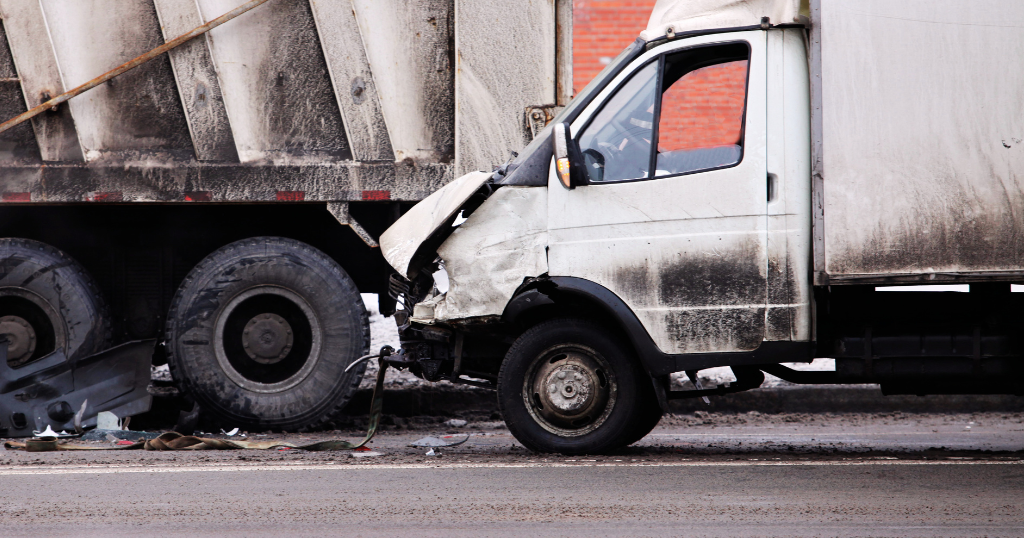
It is not always easy for a driver involved in an accident, whether with another vehicle, a fixed object, or an animal, to fully understand the obligations imposed by law. This is because the applicable rules are numerous and depend on several factors.
What exactly is meant by “Accident”?
The term “accident” is defined by the Highway Safety Code (hereinafter the “HSC”) as “an event in which injury or damage is caused by a moving road vehicle”¹.
Therefore, three elements must be present for an event to qualify as an accident:
- bodily injury or property damage;
- the involvement of a road vehicle;
- a road vehicle in motion.
The definition of a road vehicle under the HSC is restrictive. It includes a motor vehicle capable of travelling on a road, as well as trailers, semi-trailers, and detachable axles.It excludes, however, vehicles that operate exclusively on rails, power-assisted bicycles, and electrically powered wheelchairs.
As a result, an event in which a cyclist collides with a parked vehicle does not constitute an accident under the HSC. Conversely, a moving vehicle striking a stationary cyclist will be considered an accident, provided that injury or damage results.
What are a driver’s obligations in the event of an accident?
The HSC contains four sections (168, 169, 170, and 171) outlining a driver’s obligations in the event of an accident.
The driver must remain or return to the scene of the accident and provide assistance
First, the driver has a general obligation to “remain at the scene or return to it immediately after the accident and provide any assistance required to anyone who has suffered injury or damage”.
At this stage, the driver’s perception or belief as to whether damage has occurred is irrelevant. As the Court stated in Roy: “It is not for the driver involved to assume that no damage was caused and that no assistance was required. To be released from this obligation, the driver must ensure this before leaving the scene. Failing that, the offence is complete.”2
Where bodily injury is involved, there is an immediate obligation to call a peace officer. This duty arises in addition to, and does not replace the obligation to render assistance.
The driver must provide their personal information
A driver involved in an accident must provide the following information to a peace officer or to the victim: their name and address, driver’s licence number, the name and address of the vehicle’s registered owner, proof of insurance or financial responsibility, and the vehicle’s licence plate number.
The driver must contact the nearest Police Station
Where neither the owner of the damaged property nor their representative can be reached at the scene, such as in accidents involving a guardrail, traffic sign, or unoccupied vehicle, the driver must promptly contact the nearest police station to report the accident and provide all required information. This obligation also applies to any accident involving an animal weighing more than 25 kg.
The term “promptly” is interpreted strictly by the courts, requiring that the report must be made “immediately”3 or “as soon as possible”4.
Accordingly, leaving a note on the windshield of an unoccupied vehicle following an accident is insufficient, the driver must contact the nearest police station without delay.
The driver may leave the scene only after ascertaining that the owner or their representative is not present and after notifying the police. In the case of an accident involving public property, this determination can generally be made quickly5.
What are the consequences for drivers who fail to comply with these obligations?
Failure to comply with the obligations imposed by the HSC in the event of an accident carries significant consequences. Fines range from $200 to $2,000 and are accompanied by the addition of nine demerit points to the driver’s record. In addition, four points are recorded in the behaviour record of heavy vehicle drivers and in the operator’s record.
Asingle sequence of events may also give rise to multiple offences. For example, a driver who leaves the scene and fails to providehe required information may receive one offence notice for failing to remain at or return to the scene6, as well as another for failing to provide the required information7.
Businesses: Integrate clear Guidelines into your accident policies
Although accident-related obligations are numerous, they are grounded in a simple logic and revolve around two key principles:
- Assisting others;
- Providing all relevant information to “facilitate compensation for accident victims and avoid the need for police investigations to locate those involved”8.
In case of doubt regarding the application of these obligations, the driver should remain at the scene and contact emergency services. We also recommend that business incorporate clear guidelines into their internal policies to provide practical direction to drivers in such situations.
Do you have questions about accident management and your responsibilities as an owner and/or operator of heavy vehicles?
Contact us today.
Our transportation law lawyers are here to help.
[1] Section 167 of the Highway Safety Code
[2] Roy v. Victoriaville (Ville de), 2003 QCCS 6653, para. 14
[3] Laval (Ville de) v. Dubé, 2010 QCCM 269, para. 88
[4] Laval (Ville de) v. Dubé, 2010 QCCM 269, para. 87.
[5] Laval (Ville de) v. Dubé, 2010 QCCM 269, para. 41
[6] Section 168 of the Highway Safety Code
[7] Ville de Laval v. Mailloux, 2024 QCCA 1525, para.13
[8] Ville de Laval v. Mailloux, 2024 QCCA 1525, para. 11
Authors: